

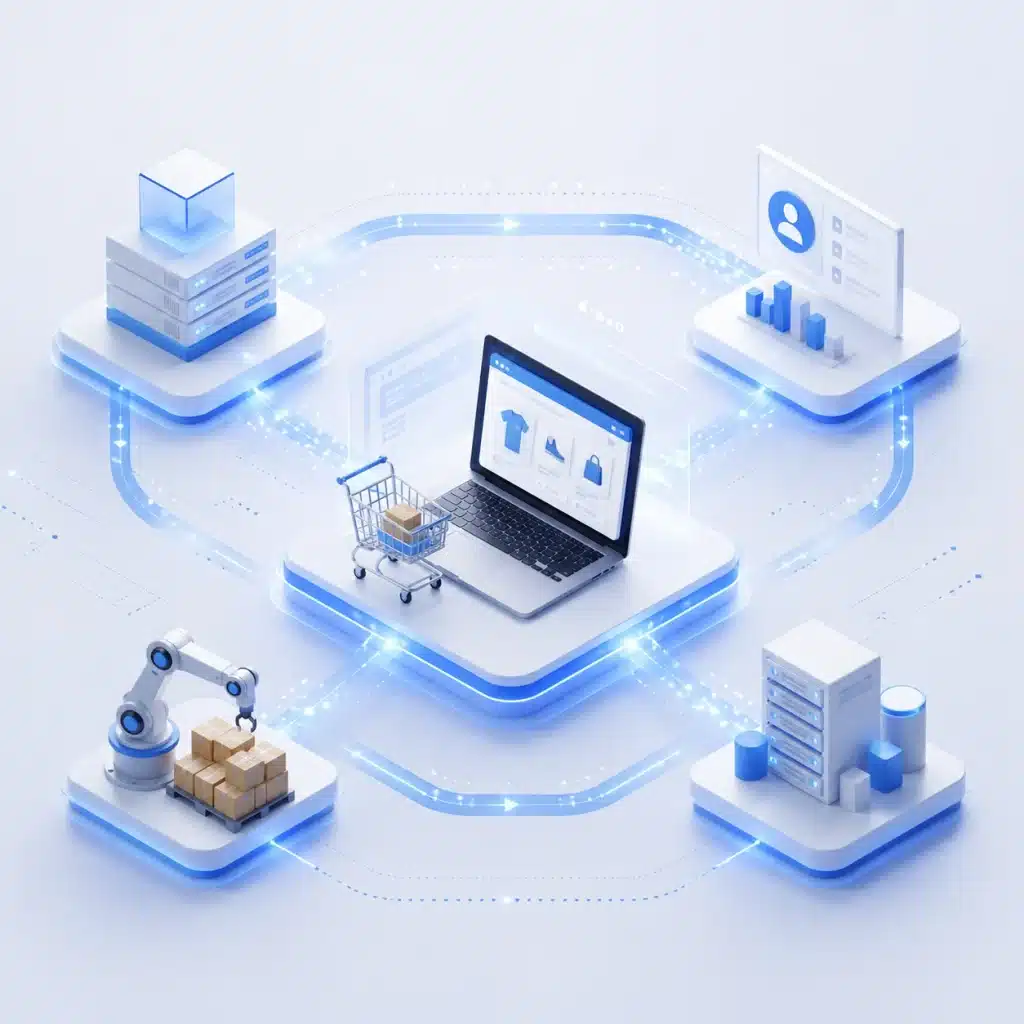
When is a module enough, and when do you need a custom integration?
The PrestaShop ecosystem offers many modules that connect popular ERP, CRM and accounting platforms. If your business processes are relatively standard, these solutions can be fast to implement and cost-effective.
However, the situation changes when your business relies on unique workflows. You may have customer-specific pricing, approval processes before orders are confirmed, custom product attributes or multiple warehouses with different inventory rules. In these situations, a generic module often becomes a limitation instead of a benefit.
Before choosing an approach, consider these questions:
- Does the external system provide a reliable API?
- Do you need one-way synchronization or two-way communication?
- Do your business processes match the module's standard behavior?
- Will additional integrations be required in the future?
- Are performance and long-term stability critical?
If several of these questions raise concerns, investing in a custom development solution from the beginning is often the better choice. It reduces future redevelopment costs and provides a platform that can evolve together with your business.
Common mistakes when planning integrations
One of the biggest mistakes is expecting integration to solve poorly organized business processes. If employees already enter inconsistent data or follow different procedures, automation will simply spread those inconsistencies much faster.
Another common mistake is trying to automate every workflow at once. Large projects become more complex, more expensive and harder to maintain.
The following issues should be avoided whenever possible:
- No clear source of truth. Multiple systems attempt to manage the same information.
- Edge cases are ignored. Returns, partial shipments and cancelled orders are not tested properly.
- Limited error logging. Failed synchronizations become difficult to identify and fix.
- Future growth is overlooked. Adding new systems later becomes unnecessarily complicated.
- Overreliance on generic modules. Standard modules work well until business requirements become more advanced.
Another important consideration is maintenance. Business software evolves continuously. PrestaShop receives updates, ERP vendors change APIs and new functionality becomes available. Long-term website maintenance helps ensure integrations continue running reliably after these changes.
Where should you start?
If you are planning a PrestaShop integration, avoid jumping directly into technical implementation. The best results come from understanding the business objectives first.
A practical starting process looks like this:
- Document your current workflow. Identify which tasks are still performed manually.
- Find the biggest bottlenecks. Determine where employees spend the most time or where errors occur most often.
- Prioritize one automation project. Focus on the process that delivers the greatest business value.
- Evaluate your systems. Check available APIs, documentation and technical limitations.
- Only then begin development.
This phased approach delivers measurable improvements much faster than attempting a complete digital transformation in one project. Once the first integration proves successful, expanding automation to additional business processes becomes significantly easier.
Why work with us?
Every business operates differently, so there is no universal integration strategy. Some companies only need a reliable module, while others require a fully customized architecture designed around their own internal processes.
When delivering e-commerce development projects and providing ongoing website maintenance, we begin by understanding how your business works before recommending any technical solution. If standard tools are not sufficient, we build a custom development solution designed specifically for your workflows, helping your PrestaShop store remain scalable, reliable and ready for future growth.
Frequently Asked Questions (FAQ)