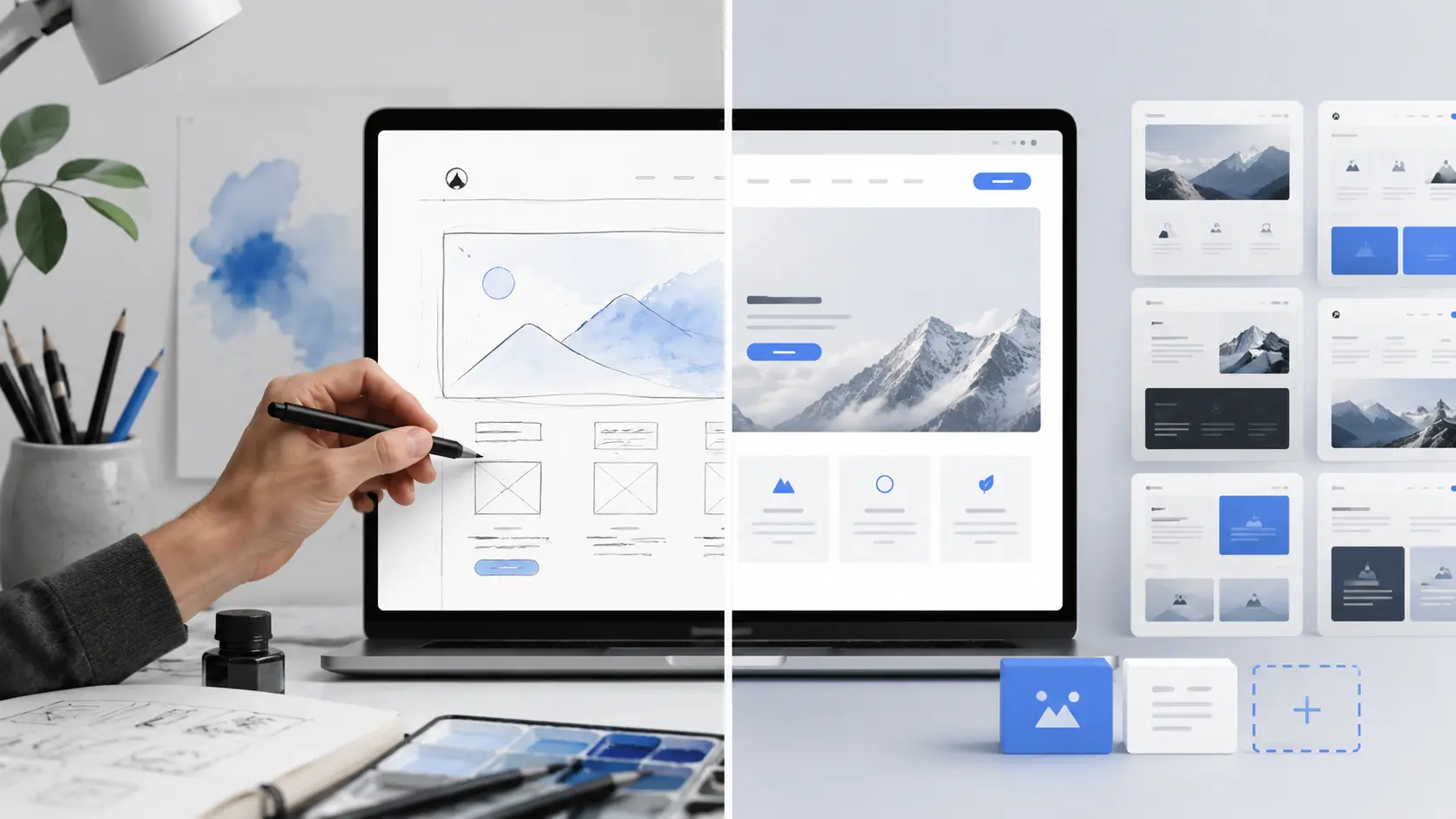
Custom website or template is one of the first decisions businesses face when starting a new website project. Both options can be the right choice, but the best solution depends on your goals, budget, and future plans. A lower initial cost does not always mean a lower total cost in the long run.
What is the difference between a custom website and a template?
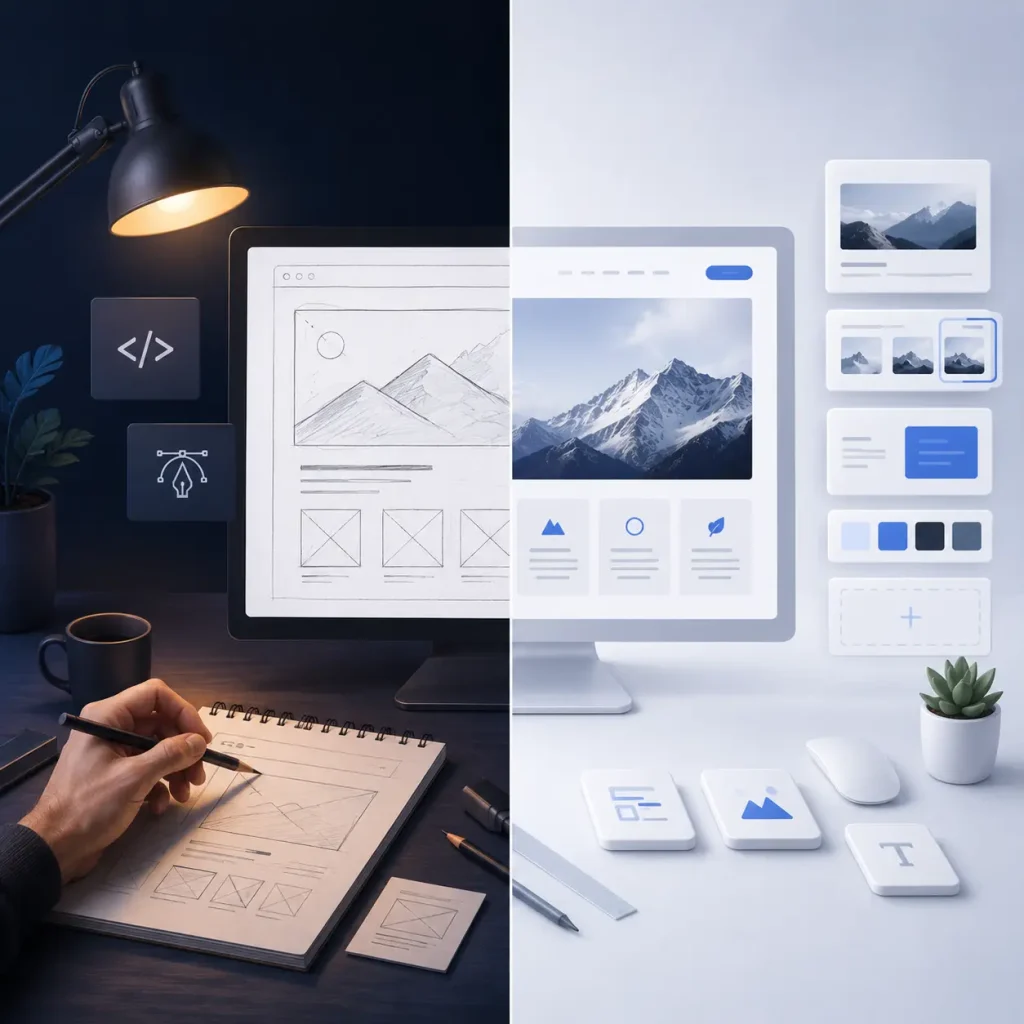
A template is a pre-designed layout that can be adapted to different businesses. It is commonly used for WordPress websites and WooCommerce stores because the design and many components are already prepared, allowing the project to launch faster.
A custom website is designed and developed specifically for your business. The structure, user experience, visual design, and functionality are planned around your requirements instead of adapting your business to an existing layout. If you later need a custom development solution, this approach usually provides greater flexibility.
The main differences include:
- Flexibility – custom projects can support unique business processes.
- Design – templates may be used by thousands of other websites.
- Scalability – custom websites are easier to expand as the business grows.
- Development time – templates often reduce the initial launch time.
- Initial investment – templates generally require a smaller upfront budget.
When is a template the right choice?
Not every business requires a fully custom solution. If you are launching a new company or simply need a professional online presence quickly, a quality WordPress template may be the most practical option.
This approach works particularly well for professional website development projects where the main objective is to present services, company information, contact details, and basic marketing content.
Even with a template, however, professional implementation usually involves significant customization. Colors, typography, layouts, performance optimization, plugins, and ongoing website maintenance all play an important role in the final result.
When is a custom website worth the investment?
If your website is expected to support sales, customer service, or internal business processes, investing in a custom solution often delivers better long-term value.
A custom project is especially beneficial when you need:
- Unique functionality. Booking systems, calculators, customer portals, or advanced integrations.
- Future scalability. Additional features can be added without major redesigns.
- Distinctive branding. A unique visual identity helps differentiate your business.
- Performance optimization. Only the necessary functionality is developed, reducing unnecessary overhead.
In WordPress, WooCommerce, and PrestaShop projects, it is common for businesses to outgrow an initial template after several years. At that point, rebuilding the website may become more expensive than planning the right architecture from the beginning.
Does a template always save money?
Templates are often considered the cheapest option, but that is not always true over the lifetime of a project.
When numerous customizations, plugins, and third-party integrations are required, adapting a template can become increasingly complex. Extensive modifications may also make future updates more difficult and increase maintenance costs.
| Question | Template | Custom solution |
|---|---|---|
| Fast launch | ✓ | Usually slower |
| Unique design | Limited | ✓ |
| Custom functionality | Limited | ✓ |
| Easy scalability | Depends on the template | ✓ |
| Long-term flexibility | Moderate | High |
Instead of comparing only the initial development cost, it is better to evaluate the complete lifecycle of the website.

Where should you start?
Before making a decision, answer a few practical questions.
- What is the primary goal of the website? Inform visitors or generate sales?
- Will the project grow? Future expansion often changes the best technical choice.
- How important is a unique brand identity? In competitive industries, differentiation matters.
- Will you need integrations? CRM, ERP, payment systems, or external APIs may require custom development.
- Who will maintain the website? Regular website maintenance keeps the system secure and reliable.
If you are planning e-commerce development, it is also important to evaluate your expected product catalog, payment providers, shipping methods, and future integrations before selecting the platform.
Why work with us?
Every project starts with understanding your business goals. We do not automatically recommend custom development if a professionally implemented template is the better solution for your needs.
When your project requires advanced functionality, we provide professional website development, e-commerce development, and a custom development solution built around your business processes. We also offer ongoing website maintenance to keep your website secure, fast, and ready for future growth.
Frequently asked questions
Is a template always the cheaper option?
Not necessarily. While the initial setup is often less expensive, extensive customizations, additional plugins, and future changes can increase the overall cost over time.
Can a template website be upgraded later?
Yes, but there are limits. If your business eventually requires complex functionality or unique workflows, rebuilding the website may be more practical than continuously modifying the template.
Is a custom website better for SEO?
A custom website does not automatically rank higher. However, it allows developers to build a cleaner structure, optimize performance, and implement technical SEO without the limitations of a generic template.
Which platforms support both template and custom development?
WordPress, WooCommerce, and PrestaShop all support both approaches. The right choice depends on your business goals, required functionality, and long-term plans.
How do I decide which option is right for my business?
Start by defining your goals, expected growth, required integrations, and available budget. A simple business website may work perfectly with a template, while larger or more specialized projects usually benefit from a custom solution.